


Our minds are busy places (okay, busy is an understatement!). For those of us lacking Buddha-like mental discipline, it’s pretty much a ceaseless flow of words and images moving across our internal screen 24/7. Now some of this thinking falls into what you might call the neutral category–grocery lists, logistics, planning. It doesn't carry much weight or elicit any particular emotional response in us. But there's another brand of thought that does have emotional impact. It’s what I call self-messaging. Self-messages are those things we say to ourselves or picture that create or enhance either a positive or negative feeling (across a wide spectrum of course).
Most of us are sending ourselves these verbal or visual notices all day, every day. And they tend to emerge around some pretty consistent themes–informed by any number of factors. We often hear this internal dialogue referred to as self-talk, and for the purposes of this post, I'll call our visual thinking, mental images.

Self-Talk
Self-talk can come in the form of a phrase, a string of statements, a command or even a full-on conversation with ourselves, internally or aloud. Whatever the form, it is usually doing one of two things: helping or hurting us.
But how much time do we spend reflecting on what we say to ourselves? Usually, not much. Not nearly as much as we spend thinking about what we say to other people, and what they say to us (big one, this!). But outside of our biology, our self-talk is probably the greatest determining factor in our emotional state at any given time.
In 2005, the National Science Foundation published an article summarizing research on human thoughts per day. It was found that the average person has about 12,000 to 60,000 thoughts per day of which 80% were negative, and 95% were exactly the same thoughts as the day before. Now imagine if you were saying those 12-60 thousand negative thoughts aloud–how scary would that be??
Think about how many times you started to feel rotten and couldn’t figure out why. If you could trace your emotions back to their source, you’d likely find a negative self-message (or five!) in there somewhere. But with everything typically going on in our heads at any given time, destructive (or even just unhelpful) thoughts often fly under the radar of our conscious awareness.
Mental Images—the other way we think
Mental images are essentially our thoughts in pictures, whether a static image or active scene. These “pictures” tend to be visual representations of our beliefs, desires, fears, experiences and goals. And they can be both conscious and unconscious.
According to research using brain imagery, the neurons in our brains interpret our mental images as equivalent to real-life action. No joke. Our subconscious mind literally does not distinguish between images we conjure and images we actually see. In other words, the exact same stress response kicks in when there is real, present danger or if you’re imagining the danger—both flood our bodies with cortisol and adrenaline.

The power of imagery can either help or hurt us, depending on what we’re picturing and how often. When we’re replaying distressing scenes from the past for instance, or anticipating– (movie-style) unfortunate future events, we’re firing up the neural pathways that feed our negative psychological filters. And of course, making ourselves feel crappy in the process. However they emerge, the idea is to diminish or transform them.
With both self-messages and mental images, one thing that can help is taking a purposeful pause, quieting your mind as best you can and seeing if you can tune into that inner voice/picture. In this way you’re teaching yourself to listen, and these regular ‘check-in’s’ will train your mind over time, to notice negative self-messages and images more readily.


The world floods our senses with more information than we can possibly process, so in order to manage that overflow, our brains are constantly "filtering" it through something called Psychological Filters. These filters are informed by the core beliefs, emotional experiences, and behavioral habits born of our biology, psychology, and life circumstances (that potent nature-nature combo). They color our experiences, then drop them promptly into categories to help us make sense of the world (usually outside of our conscious awareness).
Depending upon how entrenched these filters are in in our psyches, they get expressed to a greater or lesser degree through our thoughts, behaviors and emotions.
Negative Filters: Damage, Disconnection, Disempowerment
Any combination of life stressors, mental health challenges, and our innate negativity bias, can nudge those psychological filters into the negative camp. You can think of the resulting negative filters as the emotional version of fun house mirrors. When we are seeing something through a negative filter, certain situational elements are thrown out of proportion in relation to others. Negative things look bigger, scarier and more powerful, while the positive elements seem small, insignificant and out of reach (or perhaps invisible altogether).
When our filters cause negative things to get blown out of proportion or create the perception of negativity where none exists, we increase the likelihood of dysregulation. If for instance, our filter tells us that we are unlikeable, a mildly uncomfortable exchange with a friend might result in a panic attack; if our filter has us convinced of our inadequacy as a professional, a job rejection may lead us down the rabbit hole of self-loathing.
Negative filters can come in a wide variety of unpleasant flavors. For instance, if someone struggles with low self-esteem, they may see the world through the lens of what I call Damage–meaning they see reflected back to them proof that something is inherently wrong with them. If we consistently feel cut off from needed support we may experience the filter of Disconnection, and a filter of Disempowerment may emerge when we experience a lack of control over our life circumstances.
Of course, these are just a few of the many possible varieties of filters–everyone has their own unique filter profile–and of course there are positive filters too! The good news is, we have the ability to build positive filters, which, in addition to coloring our world a rosier shade, also mitigate the deleterious effect of those negative filters.
Proof of Your Positive Filters
While I believe that our true nature is inclusive of what we experience as negative (an acceptance of which is essential to our well-being), the question is, how can we recognize and elevate those aspects of ourselves that promote a better quality of mental and emotional health? How do we engage with and build Positive Psychological Filters? First, we need proof that they exist and are able to be accessed, which is what the following exercise will help you do. Fill in the blank with the first thing that comes to mind.
I feel most grounded when I__________________________.
___________________ is the healthiest way I've gotten myself through hard times.
________________________is proof of my inner strength.
Even when things aren't going well, _________________can usually make me smile.
______________ reminds me of what I'm capable of.
Some of the ways I've taken care of myself are:
Some of the ways I've taken care of other people are:
Thinking about __________________ reminds me that there is good in the world.
____________________ has given me a sense of hope when I've most needed it.
_________________ is one thing/person I will always be grateful for.
I’ll never forget what _____________ did for me.
One of the best days/times I can remember was _______________ .
(You can write about the place, activities, and anything else that contributed to the good-feeling of that day)
Positive Filters: Okayness, Connection, Empowerment
Chances are you've had some (hopefully many!) moments in your life when you felt truly happy, at peace, totally well. Perhaps you’d just fallen in love; gotten a great job; were looking out over a beautiful view after hiking to the top of a mountain. Or maybe it was something more subtle, like a great conversation with a friend or a relaxing massage. Whatever it was, those moments—even if they were fleeting—are proof that the positive feelings, and all the internal conditions that gave rise to them, exist within you.
Over the years, I’ve tended to dismiss my own good-feeling states as just a fortunate coalescence of unrelated elements. It eventually occurred to me though, that I might gain some insights by taking a closer look at what actually went into creating this sense of well-being. Because as random as the good feelings seem, they are in fact rooted in something real—something we can potentially recreate the conditions for with our thoughts and actions.
I’ve been able to identify some “ingredients” common to my own ‘good days’: time spent with people I enjoy, a sense of accomplishment, and an element of self-care–exercise and baths topping the list. Now of course everyone’s ‘good-day/moment’ ingredients will be unique to them, but in my years of research–both the formal and informal variety–I’ve found that there are three feeling-states consistently present during the good times: a sense of Okayness, a sense of Connectedness (to someone or something), and/or a sense of Empowerment.
These are not only as defining states for the good days and moments, but the psychological filters of mental wellness. Positive Psychological Filters being the lens through which we see the positive more readily, clearly, and convincingly than the negative. Just as with the negative, each of these filters is informed by common core beliefs and experiences that shape our view of reality. And just like the negative filters, they are reinforced by our thoughts and actions.
Building Positive Filters
While some people have a natural bent toward Positive Psychological Filters, many don’t, and just as many started off with a positive self-perception and outlook, only to have them altered as a result of unfortunate nature and/or nurture influences. The good news is that Positive Filters are buildable. By consistently replacing our habituated negative thoughts and actions with conscious positive ones, we can ‘re-nurture’ ourselves into a more positively-filtered state of mind and being.
You literally can “fake it til you make it”
Of course, you can’t simply swap out your negative filters for positive ones and call it a day. Those negative filters are deeply embedded and take some time and conscious effort to alter. It is an ongoing process, and they may rear up again during stressful or difficult times. But know that you are not stuck. It’s a process, and if you stick with it, you will (I can pretty much guarantee!) start thinking and acting in new and healthier ways.
While for some, the core beliefs and behaviors of Positive Filters may be more familiar and readily accessed; for others of us, some ‘fake it til you make it’ is required.
“Scientists say that acting a certain way for a prolonged period of time even fools your own brain (through rehearsal) into a fresh way of thinking — kind of like what you’re pretending to be is actually who you really are.”
This is similar to the “placebo effect” which researchers have repeatedly found to be just as effective as traditional treatments under the right circumstances. That’s because a neurobiological reaction tells your body that you are, or will soon be OK, through the release of neurotransmitters like endorphins and dopamine. “Fake it till you make it” is a way of doing the same thing, but for your mental wellness. You can, in effect, trick your mind and body into being healthier.
And that is mighty good news!


“Now I see the secret of making the best person: it is to grow in the open air and to eat and sleep with the earth.” Walt Whitman
Even if you don’t consider yourself a ‘nature-person’, being amidst trees, watching the ocean, strolling through a park, really, being in any natural environs, can give you a sense of ease like nothing else. And there’s good reason for this.
In his article How Nature Helps Us Heal, family doctor Leif Hass, asserts “since we evolved in nature, our senses and body rhythms are best suited for that environment”. According to biologist E. O. Wilson, known for developing the field of sociobiology, there is an “innate emotional affiliation with other living organisms” that creates a sense of calm and comfort. That is to say, the sights, sounds, and smells of nature are deeply, evolutionarily, familiar to us. Good news, as that means we always have a healer at hand!
And of course, nature is a place free of triggers and free of demands. While sitting by the water, or walking through the woods, we have no emails to answer, no calls to return. Nothing to do but just ‘be’. And what a relief that is.
And there’s a good bit of research supporting nature as a healer too.
According to the Yale School of the Environment, studies have shown that time in nature is not only an antidote for stress, it can also lower blood pressure, reduce nervous system arousal, enhance immune system function, reduce anxiety, improve mood, and lessen the symptoms of ADHD in children. Not too shabby!
Forest Bathing
The Japanese have long recognized the healing power of nature. Case in point, in the 1980s, the Forest Agency of Japan began recommending that people take walks in the woods to improve their health, eventually incorporating it into the country’s health program. This push began both to counter the effects of tech overload and to encourage citizens to reconnect with, and protect the country’s forests. And it worked! (PROOF?)
It was then that the term Shinrin-yoku or forest bathing, was coined by the head of the Japanese Ministry of Agriculture, Forestry, and Fisheries, Tomohide Akiyama.
The Power of Awe
Nature gives us something else as well. Something most of us don’t think much about: Awe.
Awe is the experience we have when in the presence of something that stuns and amazes us. Awe holds us in an exalted state as it challenges our understanding of the world. It’s a feeling we often have when encountering the beauty and mystery of the natural world, whether gazing up at the infinite-seeming expanse of stars in the night sky or looking out from the top of a mountain. But awe is not just reserved for the big ‘wow’s’; awe can emerge anytime we are drawn into a state of complete awareness. I can’t count how many times I’ve been held captive simply by the movement of a body of water.
According to Dacher Keltner, a psychologist at the University of California, Berkeley, and the author of Awe: The New Science of Everyday Wonder and How It Can Transform Your Life, awe can has positive effects beyond the immediate as well. As it helps to distract us away from our daily stressors, we shift our focus from self, to the larger world in which we’re immersed, thus creating in us a greater generosity of spirit.
An added bonus
Further, it was discovered by researcher Dr. Qing Li, a professor at the Nippon Medical School in Tokyo, that “trees and plants emit aromatic compounds called phytoncides that, when inhaled, can spur healthy biological changes.” In his studies, Li showed that when people spend time in forests, they often exhibit changes in the blood that are associated with protection against cancer, better immunity and lower blood pressure. So, if the smell of the woods has always had an effect on you, now you know why!
What a nature Rx looks like
Dr Qing Li president of the Society for Forest Medicine in Japan, and the author of Shinrin-Yoku: The Art and Science of Forest Bathing, offers a recommendation for walking in the woods that gives you the true benefits of nature:
“Make sure you have left your phone and camera behind. You are going to be walking aimlessly and slowly. You don’t need any devices. Let your body be your guide. Listen to where it wants to take you. Follow your nose. And take your time. It doesn’t matter if you don’t get anywhere. You are not going anywhere. You are savouring the sounds, smells and sights of nature and letting the forest in.”
Of course, the woods aren’t your only nature-boost option; there’s ample evidence that you can get a range of benefits from any of the following:
· time spent gazing out the window at trees
· playing nature sounds over headphones
· having house plants in your home and office
· taking breaks for a walk anywhere you can see some greenery
· using a diffuser with woodsy scents (think pine, cedar, cypress)
And believe it or not, watching nature videos has been shown to have similarly beneficial effects. Even simply viewing Planet Earth for five minutes led participants in one study to report feeling like they were a part of something larger than themselves, and that their concerns were less significant.
With all that nature has to offer, consider incorporating a little ‘green time’ into your life; you will surely be glad you did!
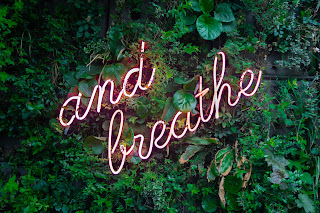

If you’re one of the many millions of people managing an overtaxed nervous system, the everyday challenges of being a human (sickness, strained finances, broken vehicles, mean people) can become overwhelming. Fortunately you can create a little emotional padding between you and all the “argh!” in your life through a little conscious breathing.
When we breathe consciously, we become aware of any unhealthy breathing patterns (think shallow breathing, holding your breath), and with practice, can shift those patterns to better support our physical and emotional well-being. But who the heck wants to be conscious of their breathing all the time? No one. Here's the good thing, even just a few minutes of conscious breathing a day, can change the way you breathe (unconsciously) the rest of the day.
The “conscious” aspect of conscious breathing means we are focused on and directing our breath, which helps to keep us connected to our physical bodies. That, in turn, keeps our minds from racing or fixating on negative things. When we use conscious breathing techniques it's like pressing “pause” on our thoughts, emotions, and actions–giving our minds much needed rest. Done, even briefly, conscious breathing also sends our minds and bodies the message that things are 'okay', that it's safe to relax, which in turn helps to retrain our bodies to react in a healthier way to stressful situations.
Science tells us that conscious breathing:
- Signals the brain to release the neurotransmitter GABA which inhibits the release of cortisol and adrenaline
- Reduces anxiety and feelings of panic
- Stimulates the lymphatic system
- Lowers blood pressure
- Reduces excess carbon dioxide in the body (at high levels this can lead to oxidative stress and inflammation)
- Stimulates the vagus nerve which sends a message back to the brain telling it to relax
But how to do it?
Obviously, we all know how to breathe. But most of us have some less than optimal breathing habits (like breathing to quickly or taking overly big breaths) which can cause either a shortage of oxygen or over oxygenation, and any number of corresponding health issues (e.g. impaired circulation, muscle stiffness, fatigue), not to mention an increase in anxiety. Optimal breathing is how we were designed to breathe, before our bad habits got in the way.
Here’s what that looks like:
- Inhale fully (aka deeply) and slowly, sending the oxygen down to your belly, filling up your lungs along the way. If it helps, you can use your mind’s eye to follow your breath in and down, picturing the air pushing out your lungs (on all sides) and belly.
- Exhale slowly, and longer: Think of expelling all the air inside your body in slow motion, making your exhale a bit longer than your inhale (for instance if you inhale on a count of 4, you’ll exhale for a count of between 6-8).
A Note about the exhale: Because we’re usually focused on our inhales, the exhale often gets shortchanged. However, when we don’t fully exhale, excess carbon dioxide—a known stressor in our nervous system—remains in our lungs. This triggers a premature inhale which leads to shallow breathing, breath-holding, and too little oxygen getting into our bodies. - Keep your jaw relaxed by leaving a little space between your teeth. You can also try this jaw stretch: open your mouth wide and stick your tongue out as far as it can go. Hold it for a few seconds and repeat 2-3 times.
Below are some simple but powerful conscious breathing techniques. I encourage you to try as many as possible to see what works best for you.
The 4 x 4

Take a breath in through your nose on the count of 4, and exhale through your nose on the count of 4. Try to draw the breath into your diaphragm, filling up your lungs and belly. Do this 3x.
Now add a “hold” after the inhale so it will be an in-breath on the count of 4, hold your breath for 4, exhale for 4. Do this 3x. You can add seconds as it becomes easier. If you stop here this is a 'triangle breath', the final step makes it a square.
Now you're going to the exact same thing only this time, add a 4 second hold after the exhale.
NOTE: You can also try something called a “straw breath” on the exhale, where you purse your lips and exhale as if through (you guessed it) a straw. This will help you exhale slowly and completely.
This is great to use any time you notice yourself getting agitated, anxious or upset, to give you a chance to regulate and refocus, and good too for any time you think of it throughout the day. The more conscious breathing the better!
Breathe Sweet Dreams

This powerful evening practice can combat nightmares and ensure a good night’s sleep, and it's incredibly simple. I recommend doing this every night before sleep but if you forget, it can also be done if you wake from a nightmare. This is also a great breathing technique for whenever you’re experiencing symptoms of stress or dysregulation.
Breathe slowly into your diaphragm on the count of four.
Hold for a count of seven, being sure to keep your body relaxed as you do.
Exhale for a count of eight.
Repeat a minimum of 10 times, fewer repetitions are significantly less impactful.
If you feel your jaw getting tight as you do this, you can soften it by stretching out your tongue as far as it can go, then keep your teeth separated when you close your mouth.
NOTE: There are a few things that do compromise the effect of this technique including short-changing any of the steps or having too much caffeine and/or sugar during the day–especially if it’s late in the day (I know because I am guilty of all of these!).
From the Ground Up

Whenever you’re feeling ungrounded or uncentered, you can take a few quiet, seated minutes to refocus yourself with this practice:
- On an inhale, imagine that you are drawing air up from the ground through your feet, then continuing up through your body into your head, and on the exhale, you are sending the air out through the top of your head. Do this 5x.
- For an added sense of groundedness, continue the exercise by going in the opposite direction, drawing the air down through your head as you inhale, sending it through your body, and out through your feet into the ground.
Awake & oxygenate. As soon as you wake up (and before the thoughts kick-in!), take 5 full breaths. This is the best possible way to start off your day (and be sure to follow them up with a positive self-message–the most important one of your day!)
Narrate your breath. Whenever you start experiencing symptoms of anxiety, inhale while thinking “in” on the inhale and “hale” on the exhale. Also very calming is silently saying to yourself "peace" on the inhale and “ful” on the exhale.
Breathe out the bad. As soon as a negative thought emerges, imagine inhaling right into it and exhaling it out of your head.
Breathe between bites. As you eat, try to insert a pause and breath between bites. This not only aids digestion, but makes the meal that much more satisfying. (I’m not saying this is easy but it’s worth it!)
Create breath-reminders. Consider having a post-it note placed somewhere you’ll regularly see it, that says something like “Take 3 Breaths” or have a phone or email alert, reminding you to breathe.
If you’re looking for more ways to incorporate conscious breathing into your daily life, consider trying yoga, tai chi or qigong. These are movement-based, contemplative practices that promote healthy breathing.


Social Icons